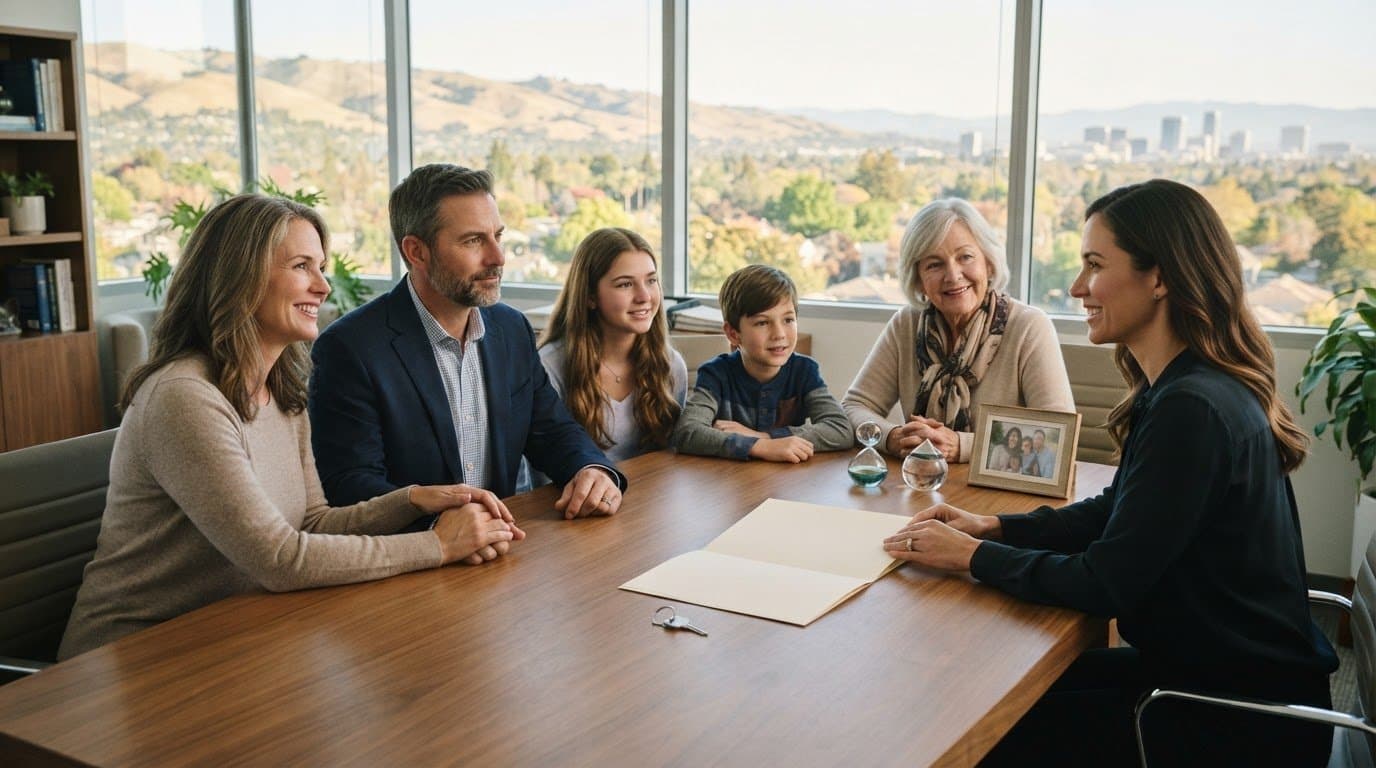

What if the most important part of a family trust plan isn’t the stack of documents, but how well it reflects the people and priorities behind it? A family trust attorney Palo Alto families choose should take time to understand their circumstances and goals, then explain how the plan can address them.
It’s reasonable to want clear answers about what your plan should cover and how the process works. The right legal guidance can help you understand your choices and make decisions without feeling rushed or overwhelmed.
This guide explains how to evaluate trust-planning experience and look for a process built around your family. You’ll also learn how a coordinated estate plan may bring together a revocable living trust, will, Durable Power of Attorney for Property, and Advance Health Care Directive. Robert P. Bergman has practiced law in California since 1980 and is a State Bar of California Certified Specialist in Estate Planning, Trust, and Probate Law. His approach is like that of an architect and contractor: first design a plan around your family’s needs, then build it using the appropriate legal documents. By the end, you’ll have practical questions to guide your next step.
Key Takeaways
- Look beyond a ready-made document package. Ask whether the planning process accounts for your family’s specific goals and circumstances.
- When evaluating a family trust attorney Palo Alto families can work with, consider California estate-planning experience, relevant credentials, and a clear, personalized process.
- Before discussing a plan, list your priorities, family considerations, and questions so you can understand how the proposed steps fit together.
- Consider related planning documents alongside a revocable living trust, and ask which assets may need to be transferred to the trust.
Table of Contents
- Why Palo Alto Families Look for a Family Trust Attorney
- How to Evaluate a Family Trust Attorney in Palo Alto
- A Practical Way to Decide Whether an Attorney Fits Your Family
- How the Law Offices of Robert P. Bergman Builds a Family Trust Plan
Why Palo Alto Families Look for a Family Trust Attorney
A set of documents can provide a starting point, but the more useful question is whether the plan reflects your family’s actual circumstances. A family trust attorney helps families plan for their assets and decide who may act on their behalf. A trust generally involves a person who creates it, someone who manages it, and people or organizations meant to benefit from it. For a plain-language overview, see Understanding the Basics of a Trust.
Families in Palo Alto and the wider San Francisco Bay Area may want to discuss how a plan could address decision-making if someone becomes unable to manage their affairs, as well as how property may be transferred after death. The details depend on each family’s needs. A coordinated estate plan may involve more than a trust, so consider related planning documents as part of the conversation. It’s also useful to ask how assets should be titled or otherwise coordinated with the trust. A trust document alone does not automatically place every asset into the trust.
Which family circumstances should shape a trust plan?
Start with the people and responsibilities that matter most to you. Parents of minor children may want to discuss who they trust to care for their children and how they hope assets will be managed for them. In a blended family, questions about providing for a current partner while also considering children from earlier relationships may need careful attention. Unmarried partners may have different priorities around decision-making and inheritance planning.
Special-needs planning also calls for attention to the individual’s circumstances and the family’s goals. Rather than assuming one document addresses every concern, use questions like these to guide a planning discussion:
- Who do you trust to make decisions if you can’t make them yourself?
- What do you hope your plan will provide for children or other loved ones?
- Are there family relationships or needs that call for extra care in how property is managed or passed on?
What should a family hope to clarify before choosing counsel?
Separate immediate concerns from longer-term goals. You may want to clarify who could handle decisions during incapacity, while also thinking about how you want an inheritance plan to support your family over time. Write down what feels most pressing and what you hope to put in place for the future. These priorities can make a discussion with a family trust attorney Palo Alto families may consider more focused and useful.
A well-designed plan gives clear form to your family’s intentions. That clarity begins with an honest conversation about who matters, what you want to protect, and which decisions you want addressed.
How to Evaluate a Family Trust Attorney in Palo Alto
Use three practical criteria to evaluate an attorney: a focus on California estate planning, experience relevant to your questions, and a process that makes room for your family’s priorities. A family trust attorney Palo Alto families consider should be able to explain how the proposed work relates to your goals, rather than treating document preparation as the whole conversation.
Why does estate-planning specialization matter?
A focused estate-planning practice keeps the discussion centered on trusts and related planning questions. A specialty credential can show that an attorney has pursued focused recognition in this area, though it does not guarantee a particular result. Consider credentials alongside relevant experience and the attorney’s ability to explain options clearly. You should understand what a recommendation is intended to address and how your circumstances may affect the discussion.
Experience is most useful when it connects to the matters you want to discuss. If you have questions about planning for a blended family or a loved one with special needs, for example, consider whether the attorney can explain the issues in plain language and help identify which details need attention. Look for an informed, understandable conversation, not a promise about what the law or a document will accomplish.
How can you recognize a customized planning approach?
Notice whether the attorney asks about your goals before discussing documents. A considered process connects your priorities to the documents being proposed, explains why each may be relevant, and leaves room for your questions. Depending on your circumstances, the discussion may include a revocable living trust, a will, a Durable Power of Attorney for Property, or an Advance Health Care Directive. Ask how the trust will be funded, including which assets may need to be transferred into it and what steps are involved.
The Law Offices of Robert P. Bergman develops estate plans around each family’s needs. The firm’s estate planning services address how relevant documents can be considered together as part of a plan.
- Consider whether the attorney listens before recommending documents.
- Look for clear explanations of the proposed work and its purpose.
- Ask how the documents work together and what follow-through the plan requires.
- Assess whether the planning conversation addresses your questions without promising a particular outcome.
Estate-planning focus and a process tailored to your family are useful criteria for choosing counsel. Use them to decide whether the attorney’s approach gives you the clarity you need to move forward.
A Practical Way to Decide Whether an Attorney Fits Your Family
A focused first conversation can help you understand whether an attorney’s process suits your needs. You don’t have to arrive with every decision made. Bring a clear sense of what matters most, then use the discussion to see whether the attorney can explain how those priorities shape the work ahead.
What information can you prepare for an initial planning discussion?
Make a brief list of topics you want to cover. You might include family relationships that affect your planning, questions about property, and concerns about who could make decisions for you if you were unable to do so. Note circumstances that may call for extra care, such as a blended family or a relative with special needs. Keep the list at a level of detail you’re comfortable discussing.
It can also help to sort your questions into what needs attention now and what you want to plan for over time. You may have an immediate question about decision-making alongside a longer-range goal for how your family should receive support. Bringing both into the conversation helps explain the outcome you hope to work toward without assuming that one document will address everything.
How should you assess the proposed planning process?
Listen for a clear connection between what you’ve shared and the attorney’s recommendations. The attorney should explain the purpose of proposed steps, what decisions remain yours, and how the process will move forward. If an explanation feels unclear, ask for it in everyday language. Understand what is being proposed before deciding whether to proceed.
A template or a single document may address some needs, but your family’s circumstances may raise additional questions. Consider whether the conversation leaves room to discuss them and whether the attorney explains how related planning documents may fit together. Trust planning can help organize your intentions, but it should not be presented as a guarantee that every court process will be avoided.
Use the discussion to assess both the plan and the working relationship. Do you feel heard? Are the next steps understandable? A family trust attorney Palo Alto families consider should make it easier to see how your priorities are being addressed, even if some details require further discussion.
Discuss your family’s estate-planning needs## How the Law Offices of Robert P. Bergman Builds a Family Trust Plan
At the Law Offices of Robert P. Bergman, planning begins with your family’s concerns and the decisions you want your plan to address. Robert P. Bergman takes an architect’s approach to designing a custom plan, then puts its parts in place through legal drafting. The aim is to give your planning a clear structure, not to promise that every court proceeding can be avoided.
What can a coordinated estate plan address?
A revocable living trust, will, Durable Power of Attorney for Property, and Advance Health Care Directive serve different planning purposes. Together, they may address how certain property is planned for, who can make financial decisions if needed, and what health care instructions you want documented. Which documents make sense depends on your circumstances and legal guidance.
For example, you might want to discuss both future financial decision-making and how you hope your family will receive an inheritance. Considering those concerns together can help clarify how the documents relate and where your plan may need attention. The firm’s estate planning services bring relevant documents into a coordinated conversation around family needs.
Planning for disability and inheritance can raise different questions, so the discussion should make room for both. Your priorities help guide which issues to address and how the documents may fit together. A trust also needs appropriate follow-through: ask which assets should be transferred to it and how to keep the plan coordinated as circumstances change. No plan should be treated as a guarantee against every future legal or court process.
If an asset intended for a trust was left outside it, an uncontested Heggstad petition under Probate Code Section 850 may be relevant. Bergman assists attorneys, title companies, and clients throughout California with Heggstad petitions. The firm files uncontested Heggstad petitions in Santa Clara, San Mateo, and Contra Costa Counties. Contested petitions are not handled by the office.
What is the next step for a Palo Alto family?
An initial conversation gives you space to describe what matters to your family, ask questions, and learn how the planning process works. You can begin with a concern you want to address, even if you’re still sorting through the details. A family trust attorney Palo Alto families work with should help make the discussion understandable and focused on your needs.
Contact the Law Offices of Robert P. Bergman## Take the Next Step Toward a Plan That Fits
You don’t need to have every detail settled before moving forward. Start with one clear intention: what would you most like your estate plan to help your family address? That question can turn a broad concern about the future into a focused planning conversation.
As you consider a family trust attorney Palo Alto families may consult, look for an approach that helps you explain your priorities and understand how the proposed plan responds to them. A thoughtful discussion can help you identify what you already know, what still needs attention, and which questions to explore with legal guidance. The aim isn’t to make every decision at once. It’s to take the next step with greater clarity.
Bergman serves families in Palo Alto and communities across the San Francisco Bay Area, including San Jose, Saratoga, Cupertino, Los Gatos, Sunnyvale, Campbell, Milpitas, Mountain View, Los Altos, Los Altos Hills, Menlo Park, Fremont, Redwood City, Union City, Hayward, and Gilroy.
Talk with the Law Offices of Robert P. Bergman about your family’s estate-planning goalsYour family’s needs can change over time, and a plan can be shaped with those needs in mind. Begin with the questions that matter most to you, and contact Bergman to discuss your estate-planning goals.
Frequently Asked Questions
How do I choose a family trust attorney in Palo Alto?
Choose a family trust attorney Palo Alto families can speak with openly, whose estate-planning background fits the questions you have. During an initial conversation, notice whether explanations are understandable and whether you have room to ask follow-up questions. Ask how the proposed work relates to your goals, what documents may be involved, and how the engagement will proceed. A credential can inform your decision, but it doesn’t guarantee a particular outcome.
Is a revocable living trust the right choice for every family?
No single estate-planning arrangement is right for every family. A revocable living trust may be worth discussing if you want to plan for how certain property is managed and transferred, but your goals, relationships, and assets matter. A family with changing circumstances may have different planning questions from one whose priorities are already settled. An attorney can explain whether a trust fits your situation and what other documents may be relevant.
Can unmarried partners create a family trust together?
Unmarried partners can discuss creating a trust together as part of their estate planning. The conversation can clarify which property each person wants included, who should manage it, and how each partner hopes the plan will provide for loved ones. Partners may have different property or family considerations, so avoid assuming a standard arrangement will reflect both people’s intentions. A California estate-planning attorney can explain options based on your circumstances.
What should I bring to a first estate-planning meeting?
Bring a short list of your goals, questions, and any existing estate-planning documents you want to discuss. If useful, note general information about property you want to plan around, important family relationships, and people you might trust to handle financial or health care decisions. You don’t need to arrive with every detail organized. The purpose is to make the discussion more focused and identify what additional information may be useful later.
How much does it cost to hire a family trust attorney?
The cost depends on the work involved and the documents your family’s plan may require. A straightforward planning matter may differ from one involving multiple family considerations or specialized planning. Before deciding, ask for a clear explanation of the proposed scope, how fees are structured, and what work is included. That helps you understand the engagement terms before proceeding.
Can a family trust include planning for a relative with special needs?
Yes, special-needs planning can be part of a family’s estate-planning discussion. A Special Needs Trust may be considered when planning for a relative, but its design should account for that person’s circumstances and the family’s intentions. Discuss who may manage funds and what kinds of support the family hopes to provide. An attorney can explain the planning options and help identify questions that need careful attention.